Change Car Background: Consumer Apps vs Professional Dealer Tools Compared
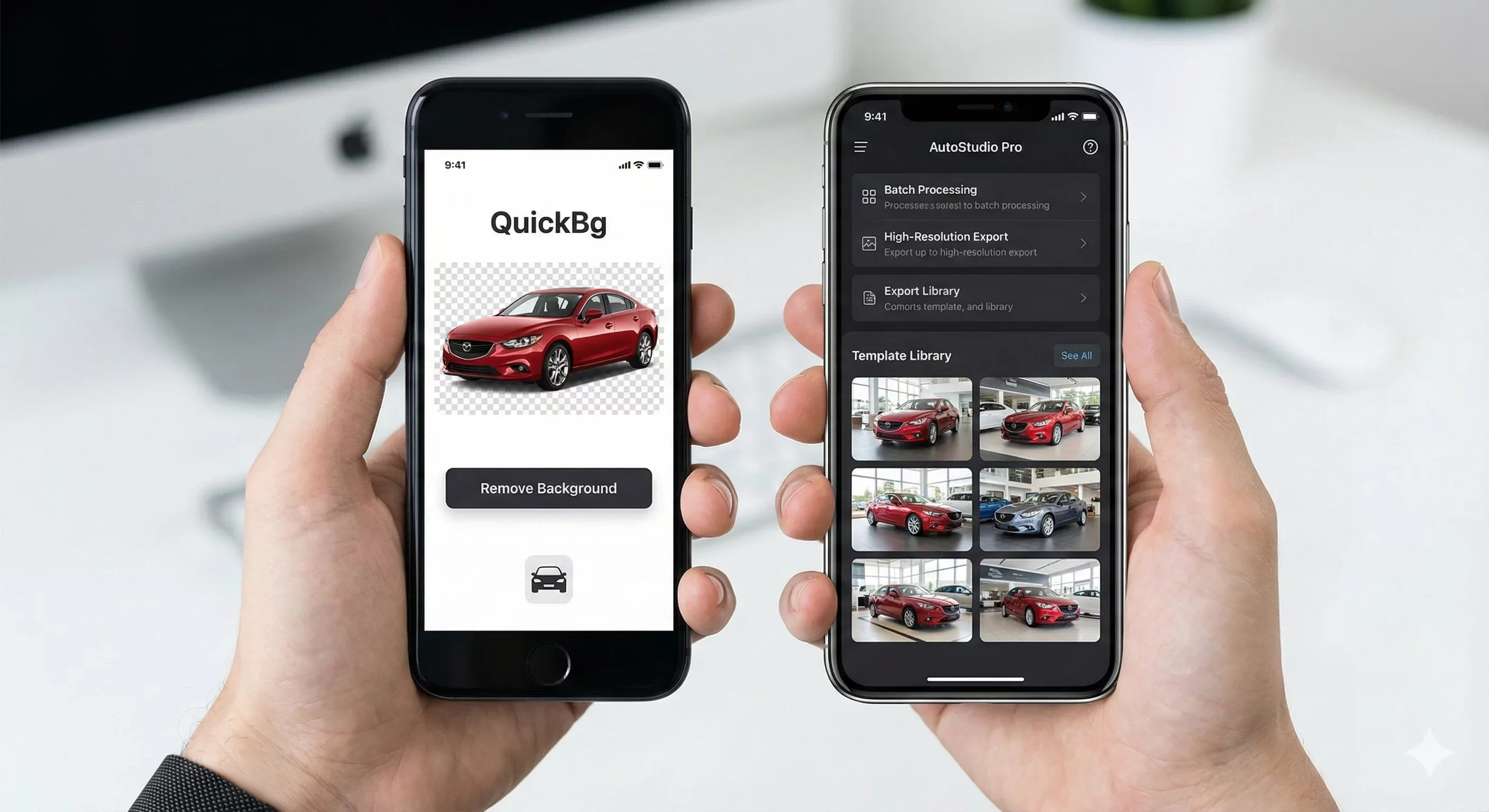
When you need to change car background on listing photos, you can choose between free consumer apps and professional dealer-grade tools. Both categories include capable options, but they serve different needs. This comparison helps dealers understand which approach fits their volume, quality requirements, and operational workflow.
The best choice depends on your specific situation. What works for an individual seller listing one car differs from what works for a dealer processing dozens of vehicles weekly.
The Consumer App Landscape
Consumer background removal apps have proliferated as AI capabilities have become accessible. These tools target individual users who occasionally need to edit photos, including sellers listing personal vehicles on classified platforms.
Common Consumer Options
Popular consumer apps include general-purpose background removers like Remove.bg, PhotoRoom, and various mobile apps with background editing features. Some social media platforms now include basic background removal built into their posting workflows.
These tools share common characteristics: free or low-cost access, simple interfaces optimized for quick edits, and general-purpose processing designed to work adequately across many photo types.
Consumer App Strengths
Accessibility is the primary advantage. Anyone can use these tools immediately without training, subscription commitments, or specialized knowledge. For someone selling their personal vehicle once every few years, this accessibility matters more than advanced features.
Cost also favors consumer apps for occasional use. Free tiers handle light usage adequately. Even paid consumer options cost less than professional tools when usage is minimal.
Consumer App Limitations
General-purpose processing creates issues with automotive photos specifically. Consumer tools are not trained on vehicle imagery and struggle with car-specific challenges: complex edges around mirrors and antennas, wheel spoke gaps, reflective paint, and chrome trim.
Batch processing is typically unavailable or limited. Processing photos one at a time works for single vehicles but becomes impractical at dealer volumes.
Background options are often generic. Consumer apps offer backgrounds designed for product photos, portraits, or social media, not automotive presentation specifically.
Consistency is difficult to maintain. Different photos processed at different times may produce varying results. No template system ensures inventory-wide standardization.
The Professional Tool Category
Professional tools designed for dealers and automotive photographers address the limitations of consumer apps at the cost of higher complexity and price.
Professional Tool Characteristics
Dealer-grade tools offer automotive-specific processing trained on vehicle imagery. They include features like batch processing, template libraries, shadow generation, lighting optimization, and export presets for marketplace platforms.
These tools assume regular use at meaningful volume. Pricing reflects professional value delivery rather than consumer accessibility.
Professional Tool Strengths
Edge quality around vehicle-specific challenges far exceeds consumer options. Mirrors, wheels, antennas, and reflective surfaces are handled with automotive-aware processing rather than generic object detection.
Batch processing transforms operational efficiency. Upload a complete vehicle photo set, apply consistent settings, and export marketplace-ready files in minutes. The time savings compound across every vehicle processed.
Template systems ensure consistency. Select a background once and apply it identically across your entire inventory. No variation between photos processed on different days or by different staff members.
Integration with dealer workflows means export presets for specific marketplaces, file naming conventions that match inventory systems, and processing volumes aligned with dealer needs.
Professional Tool Considerations
Cost exceeds consumer options. Subscription pricing or per-image fees create ongoing expenses that must be justified by operational value. For low-volume situations, this cost may not be warranted.
Learning curve exists, though less than traditional editing software. Staff need to understand templates, batch workflows, and quality verification rather than just clicking one button.
Comparison: Specific Capability Areas
Edge Quality Around Mirrors
Consumer apps frequently struggle with side mirrors, creating halos, cutting off mirror edges, or failing to handle the thin mounting stems. Professional tools specifically address this common automotive challenge.
Wheel Spoke Handling
The gaps between wheel spokes require precise detection to avoid background bleed-through. Consumer tools often treat spoke gaps as part of the wheel. Professional tools use automotive-specific detection to handle spokes correctly.
Shadow Generation
Consumer apps typically remove shadows without replacement, creating floating vehicles. Professional tools automatically generate shadows appropriate to the replacement background.
Lighting Harmonization
Professional tools adjust vehicle appearance to match the replacement background lighting. Consumer apps place vehicles into new backgrounds without this harmonization, creating obvious composites.
Batch Efficiency
Consumer apps: process one photo at a time, manually select background for each. Professional tools: process complete vehicle sets simultaneously with consistent settings.
Template Consistency
Consumer apps: manually select background each time, no guarantee of consistency. Professional tools: save templates that apply identical treatment across all photos.
Decision Framework: Which to Choose
Consider these factors when deciding between consumer apps and professional tools.
Choose Consumer Apps When:
- Processing fewer than five vehicles monthly
- Quality expectations are modest
- Consistency across inventory is not a priority
- No budget exists for professional tools
- Staff time is unlimited relative to processing volume
Choose Professional Tools When:
- Processing more than five vehicles monthly
- Professional presentation quality is expected
- Inventory consistency matters to your brand
- Staff time has value that justifies tool investment
- Batch processing efficiency provides operational benefit
The Crossover Point
For most dealers, the crossover point where professional tools become clearly superior arrives around ten vehicles monthly. Below this volume, either approach can work. Above it, consumer app limitations create meaningful operational drag.
The crossover point shifts earlier if quality expectations are high or if staff time is particularly valuable. It shifts later if budgets are extremely constrained or if visual presentation is not a competitive differentiator in your market.
Testing Both Approaches
Before committing to either approach, run a practical test.
Process the same challenging vehicle photos through both a consumer app and a professional tool. Compare edge quality, shadow handling, overall believability, and processing time. Multiply the time difference by your expected monthly volume.
Have someone unfamiliar with the processing review results blind. Can they tell which photos came from which approach? If consumer app results are indistinguishable, they may suffice for your needs. If differences are obvious, professional tools likely warrant their cost.
How CarBG Fits This Comparison
CarBG represents the professional tool category with automotive-specific AI processing, batch workflows, and template systems designed for dealer operations. The platform addresses the specific limitations that make consumer apps problematic at dealer volumes.
For dealers currently using consumer apps and experiencing quality or efficiency issues, CarBG provides the upgrade path to professional results without requiring traditional photo editing skills.
Final Thoughts
Consumer apps and professional tools both change car background effectively for their intended users. The choice depends on your volume, quality needs, and operational context. Consumer apps work for occasional, low-stakes editing. Professional tools deliver the quality, consistency, and efficiency that dealer operations require. Test both approaches on your actual photos before deciding. Start a free CarBG trial to compare professional results against what consumer apps have been producing.
Are free background removal apps good enough for dealer listings?
Free apps can work for very low volume dealers with modest quality expectations. However, automotive-specific challenges like mirrors, wheels, and shadows often produce visible problems. At meaningful dealer volumes, time spent correcting consumer app issues typically exceeds professional tool costs.
How much better are professional tools really?
Edge quality, shadow handling, and lighting harmonization are noticeably superior in professional tools. The difference becomes obvious when comparing results side-by-side. Whether that difference justifies the cost depends on your quality standards and volume.
Can I start with consumer apps and upgrade later?
Yes, though published photos processed with consumer apps may look inconsistent alongside later photos from professional tools. Starting with professional tools avoids needing to reprocess older inventory for consistency.
What volume justifies professional tool investment?
Most dealers find professional tools clearly worthwhile above ten vehicles monthly. The crossover point depends on staff time value, quality expectations, and how much consistency matters to your brand.
Do consumer apps handle all car types equally?
Consumer apps struggle more with complex vehicles: chrome-heavy trucks, sports cars with intricate styling, convertibles with visible interior backgrounds. Simple sedan shapes process more reliably.
Why do professional tools cost more?
Development investment in automotive-specific AI, batch processing infrastructure, template systems, and ongoing improvement creates costs that consumer app business models do not support. The pricing reflects professional value delivery.