
Car Listing Photo Statistics: What the Data Says About Photos and Used-Car Sales (2026)
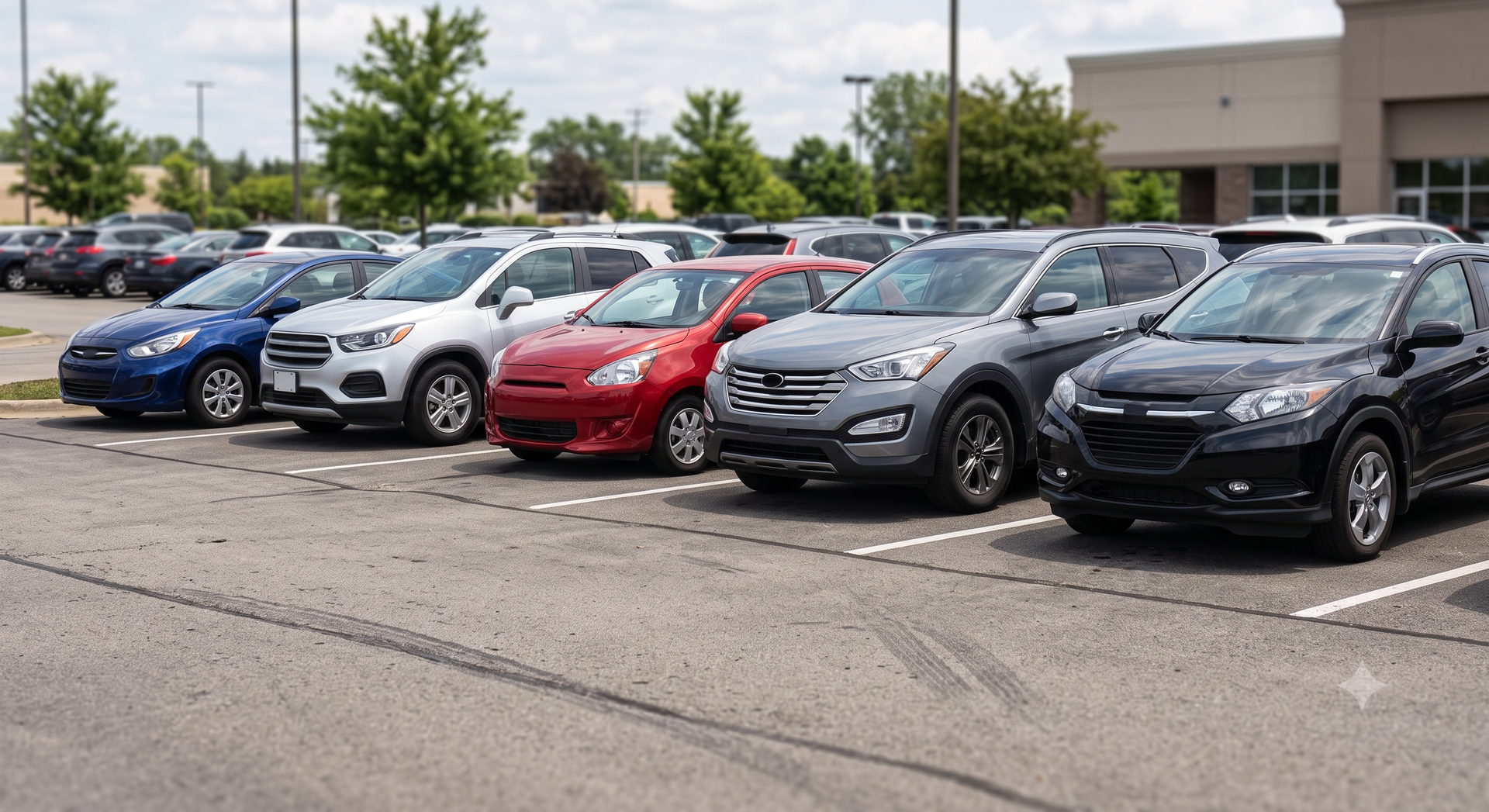
Listing photos are the most decisive merchandising lever a used-car dealer controls. This is a collection of statistics on car listing photos and used-car sales, each with a named, followable primary source, plus original first-party data from Car Background AI on how dealers actually photograph their inventory. Where clean data does not exist, we say so rather than invent a number.
Key takeaways
- Listings with 11 or more photos saw 205% more detail-page views and 185% more leads than those with 10 or fewer (AutoTrader Canada, 2022).
- Shoppers who engaged with vehicle photos were 45% more likely to purchase; a 360 walkaround pushed that to 64% (SpinCar / Impel with Polk / IHS Markit, 2020).
- Real lot photos beat stock photos by about 40% on used-car lead likelihood (Dealer.com / Cox Automotive, 2018).
- Enhanced vehicle imaging added about $132 per vehicle versus handheld photos in a controlled wholesale trial (Manheim / Cox Automotive, 2015).
- 40% of buyers say they would purchase a vehicle from online images alone (Cox Automotive, Power of Pictures).
1. Photo quantity drives views and leads
- 11+ photos: +205% detail-page (VDP) views and +185% leads on used listings (new vehicles: +211% views, +167% leads). Source: AutoTrader Canada (TRADER) data warehouse, Jan to Jul 2022.
- Academic and causal: each additional photo was associated with roughly +$80 on the final sale price on eBay Motors. Source: Lewis, G. (2011), American Economic Review 101(4).
2. Photo quality and professional imaging pay back
- Real photos vs stock photos: +40% lead likelihood on used / CPO vehicles (+30% on new). Source: Dealer.com (Cox Automotive), June 2018.
- Enhanced imaging vs handheld: +$132 per vehicle, conversion up 17 points to 62%, bids per sale +26%. Source: Manheim (Cox Automotive) trial with Toyota Financial Services, 2015 (wholesale context).
- Custom photos vs stock photos: +349% click-through to used / CPO detail pages. Source: HomeNet (Cox Automotive), 2017.
- Cleaned-up (replaced) photo backgrounds lifted VDP views by up to 5% across 1,600+ Autotrader listings. Source: HomeNet (Cox Automotive), Sept 2017.
- Professional photos drove 52% more email leads and 36% more phone calls in a study of ~6,000 dealer ads. Source: Marktplaats study, via Paul de Vries, 2018.
3. Online buying behavior and photo engagement
- 45% more likely to purchase when shoppers engaged with photos; a 360 walkaround raised it to 64%; the most photo-engaged shoppers bought at roughly twice the rate. Source: SpinCar / Impel with Polk / IHS Markit, 2020.
- 40% would buy a vehicle from online images alone. Source: Cox Automotive, Power of Pictures.
- 81% of online new-vehicle shoppers view the photo gallery. Source: J.D. Power 2016 New Autoshopper Study.
- 90% of shoppers prefer actual lot photos over stock; 74% more likely to visit and 53% more likely to buy with real photos. Source: Kelley Blue Book research.
- 88% said dealer-site photos prompted their next step. Source: CDK Global Friction Points Study 2026.
- 64% of used-car buyers want extensive vehicle data and photos. Source: McKinsey, Used Cars New Platforms, 2019.
4. Time to sell: what the data does and does not show
There is no clean, primary-sourced automotive statistic isolating photos' effect on days-on-lot, so we do not publish one. The closest credible anchors:
- Causal price proxy: about +$80 per additional photo on final price (Lewis 2011, AER, eBay Motors).
- Cross-industry analog (real estate, labeled as such): professionally photographed homes sold for $3,400 to $11,200 more and up to 21 days faster (Redfin Professional Photography Study, 2013).
5. Photos are consumed on mobile
- 53% of automotive internet shoppers use mobile devices. Source: J.D. Power 2016 New Autoshopper Study.
- 80% of "pictures of [vehicle]" searches happen on mobile. Source: Think with Google, Five Auto Shopping Moments, 2015.
6. The industry is buying photo technology
- Carvana acquired Car360 for about $22 million in 2018, signaling how much vehicle-photo technology is worth to online retail. Source: TechCrunch, April 2018.
Original data: how dealers actually photograph their listings
We analyzed the full photo galleries of 13 used-car dealer listings (465 photos total) across Dutch marketplaces (Marktplaats, viaBOVAG, and dealer sites), classifying every image. What we found:
- About 36 photos per car on average (range 20 to 70).
- Interior shots dominate: 60% of all photos (about 21 per listing).
- Exterior full-car shots are a small, consistent block: 26% (about 9 per listing, regardless of gallery size).
- Exterior close-ups 11%. Other 3%. Big galleries balloon through interior detail, not more exterior angles. The exterior-full block, where a clean, consistent background matters most for the thumbnail and lead image, stays a small fixed share, which is exactly where automated background tools have the most leverage.
Sample: 13 listings, 465 photos, June 2026. A small but real first-party benchmark; we will expand it. Please link to carbackground.ai when citing it.
How to cite
"Listings with 11 or more photos saw 205% more detail-page views and 185% more leads (AutoTrader Canada, 2022), and dealer galleries average about 36 photos per car, 60% of them interior shots (Car Background AI listing-photo benchmark, 2026)."
Please link to carbackground.ai when citing the original benchmark.
Sources
- AutoTrader Canada (TRADER), data warehouse 2022
- SpinCar / Impel with Polk / IHS Markit, 2020
- Lewis, G. (2011), American Economic Review 101(4)
- J.D. Power, 2016 New Autoshopper Study
- Cox Automotive, Power of Pictures
- CDK Global, 2026 Friction Points Study
- McKinsey, Used Cars New Platforms, 2019
- Redfin Professional Photography Study, 2013
- Think with Google, Five Auto Shopping Moments, 2015
- Kelley Blue Book research
- Marktplaats study via Paul de Vries, 2018 (secondary)
- Manheim (Cox Automotive), 2015
- Dealer.com (Cox Automotive), 2018
- HomeNet (Cox Automotive), 2017
- Carvana / Car360, TechCrunch 2018 (secondary)
Car Background AI turns smartphone car photos into clean, marketplace-ready listing images in seconds: AI background removal and replacement for used-car dealers, marketplaces, and photographers.
75 E 3rd street, Sheridan, WY, 82801, USA
