AI Photo Enhancer vs Manual Editing for Car Dealers: Speed, Quality, and Cost
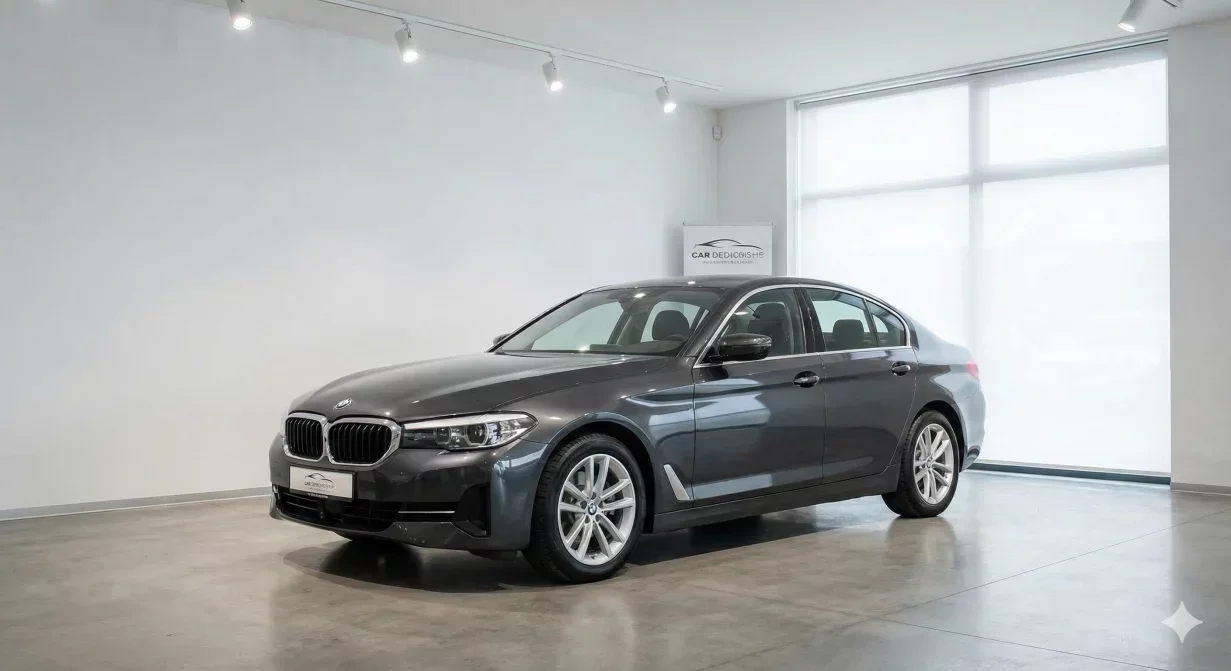
AI photo enhancement and manual editing both produce professional results, but they differ dramatically in speed, scalability, and cost at dealer volume. Car background quality plays a critical role in this process. This comparison helps you understand which approach fits your operational needs and where each method excels.
Defining the Approaches
AI Photo Enhancement
Automated processing using machine learning to analyze and enhance images. AI identifies what needs correction and applies adjustments without human intervention for each photo. Processing is batch-oriented and template-driven.
Manual Editing
Human editor using software tools to adjust each image individually. The editor makes decisions about exposure, color, cropping, and other adjustments based on their judgment. Each photo receives individual attention.
Speed Comparison
AI Photo Enhancement
Processing time: seconds per image in batch mode. A complete vehicle set (10-15 photos) processes in under a minute. An entire day's inventory can process while you handle other tasks.
Consistency: identical processing time regardless of image complexity. The 50th photo processes as fast as the first.
Manual Editing
Processing time: 2-10 minutes per image depending on required corrections and editor skill. A complete vehicle set requires 30-90 minutes of focused editor time.
Variability: complex images requiring more correction take longer. Editor fatigue affects speed as volume increases.
Speed Verdict
AI is dramatically faster often 50-100x faster at equivalent volume. For high-volume dealers, this speed difference determines operational viability.
Quality Comparison
AI Photo Enhancement
Consistency: every image receives identical treatment within a batch. No variation from editor mood, fatigue, or interpretation. Results are predictable.
Limitations: AI may not handle unusual situations optimally. Edge cases that fall outside training patterns may produce suboptimal results.
Capability: modern AI handles exposure, color, background replacement, and edge refinement effectively. Quality rivals skilled manual editing for routine corrections.
Manual Editing
Flexibility: editors can handle any situation with appropriate skill. Unusual images receive customized treatment. Creative judgment addresses edge cases.
Variability: results depend on individual editor skill and attention. Quality may vary between editors and across long editing sessions.
Peak quality: a skilled editor focusing on a single important image can exceed AI quality through careful attention to detail.
Quality Verdict
For routine dealer photos, quality is comparable. AI provides superior consistency; manual provides superior handling of unusual situations. For most dealer inventory, AI quality is sufficient and consistency is more valuable than peak potential.
Cost Comparison
AI Photo Enhancement
Cost structure: typically subscription or per-image pricing. Costs are predictable and scale linearly with volume. No human resource costs beyond initial setup.
At scale: per-image costs decrease as volume increases for many subscription models.
Manual Editing
Cost structure: editor salary/hourly rate plus software tools. Fixed costs regardless of volume processed. Scaling requires additional human resources.
At scale: costs increase linearly with volume.
Cost Verdict
AI is significantly more cost-effective at dealer volume. Manual editing may be comparable for very low volume but becomes prohibitively expensive as volume increases.
Use Case Recommendations
Choose AI Enhancement When:
- Processing 20+ vehicles monthly
- Consistency across inventory is priority
- Speed to listing matters competitively
- Staff time is better spent on sales than editing
- Budget is constrained relative to volume
Choose Manual Editing When:
- Very low volume (under 10 vehicles monthly)
- Each vehicle requires unique creative treatment
- Premium positioning requires maximum individual attention
- You have existing editing staff with capacity
How CarBG Compares
CarBG provides AI enhancement optimized for automotive dealer volume. Processing speed handles high-volume operations while quality meets professional standards.
The platform is designed for dealer workflows where consistency and speed matter more than individual photo peak quality.
Final Thoughts
For most dealers, AI photo enhancement provides the speed, consistency, and cost-effectiveness that manual editing cannot match at volume. Evaluate based on your specific volume, quality requirements, and operational priorities. Try CarBG to compare AI results against your current approach.
The CarBG Angle (FAQ Bits)
Is AI enhancement quality as good as professional manual editing?
For routine dealer photos, quality is comparable. AI provides superior consistency; skilled editors can achieve higher peak quality on individual images.
How much faster is AI than manual editing?
Typically 50-100x faster. A vehicle set taking an hour manually processes in under a minute with AI.
When does manual editing still make sense?
Very low volume, unusual vehicles requiring custom treatment, or premium positioning requiring maximum individual attention.
Can I use both AI and manual editing?
Yes. AI handles bulk processing; editors handle exceptions or quality verification. Hybrid approaches capture benefits of both.
What volume makes AI more cost-effective than manual?
Generally above 15-20 vehicles monthly, AI becomes more cost-effective.
Will AI eliminate the need for photo editing staff?
AI changes the role rather than eliminating it. Staff shifts from primary editing to quality verification and exception handling.

Tamas Magda
Co-founder, Growth and Partnerships at Car Background AI
Tamas Magda is co-founder of Car Background AI (carbackground.ai, CarBG), an AI car photo editor that replaces backgrounds on dealership inventory photos. He leads partnerships, growth, and business architecture, working with the development team on the product roadmap and with dealers on what their online listings actually need. He brings a background in venture building across APAC and MENA, and writes about vehicle merchandising, dealer photo workflows, and using AI on listing images without altering the car itself.
Tamas is a co-founder of Car Background AI and has a financial interest in the company. Articles that mention Car Background AI reflect that relationship.