Physical Car Photo Studio vs AI Processing: Real Cost and Quality Comparison
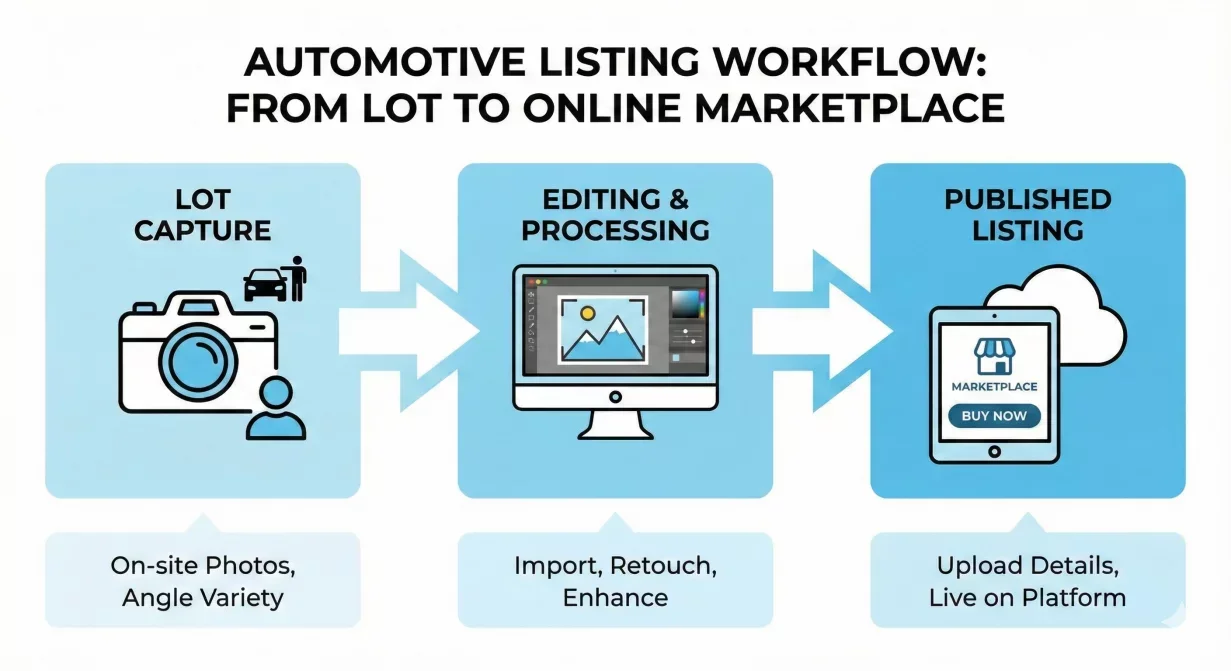
A physical car photo studio and AI-based photo processing both produce professional vehicle images, but their cost structures, space requirements, and operational implications differ dramatically. This comparison provides the real numbers dealers need to make informed infrastructure decisions.
Neither approach is universally superior. The right choice depends on your volume, available space, capital position, and operational preferences.
Physical Car Photo Studio: What It Actually Costs
Physical studio options range from basic backdrop systems to elaborate automated turntable installations. Understanding the full cost picture requires looking beyond equipment purchase price.
Equipment Investment
Basic backdrop system: A simple backdrop stand with professional background material costs two thousand to five thousand dollars. This creates a clean background but requires manual vehicle positioning and does not control lighting.
Lighting kit: Professional automotive lighting sufficient to create consistent results across vehicle colors adds five thousand to fifteen thousand dollars. This includes strobes or continuous lights, modifiers, and mounting hardware.
Enclosed photo booth: Purpose-built automotive photo booths with integrated lighting start around fifteen thousand dollars for basic models. Full-featured automated systems with turntables, integrated cameras, and software run thirty thousand to fifty thousand dollars or more.
Premium automated systems: High-end automated photography solutions with 360-degree capture, integrated processing, and advanced features can exceed one hundred thousand dollars.
Space Requirements
Any physical studio requires dedicated space that cannot serve other purposes during photo shoots.
Minimum footprint: A basic backdrop setup needs approximately four hundred square feet to accommodate a vehicle with working space around it.
Proper studio: A complete lighting environment with room to work requires six hundred to one thousand square feet minimum.
Automated booth: Commercial photo booths need their own footprint plus clearance, typically seven hundred to fifteen hundred square feet including approach space.
Value calculation: If your lot space generates revenue per square foot through vehicle display, studio space represents ongoing opportunity cost beyond initial investment.
Installation and Setup
Electrical requirements: Professional lighting demands dedicated circuits. Automated systems may require three-phase power. Electrical upgrades add one thousand to five thousand dollars depending on existing infrastructure.
Environmental control: Indoor studios need climate control to protect equipment and ensure consistent results year-round. HVAC for studio space adds ongoing utility costs.
Installation labor: Professional installation of booth systems typically adds two thousand to ten thousand dollars. Complex systems may require manufacturer technicians.
Ongoing Operational Costs
Maintenance: Lighting equipment requires bulb replacement, calibration, and occasional repair. Budget one to three percent of equipment cost annually for maintenance.
Consumables: Backdrop materials wear and need replacement. Cleaning supplies maintain professional appearance.
Utilities: Lighting draws significant power. Climate control adds load. Monthly utility costs increase proportionally.
Staff time: Physical studios require driving vehicles to the studio, positioning, shooting, and returning vehicles. This handling time exceeds the photography time itself.
AI Processing: What It Actually Costs
AI-based background replacement and enhancement eliminates physical infrastructure in favor of software processing of lot-captured photos.
Software Investment
Per-image pricing: Some platforms charge per photo processed, typically ranging from ten cents to one dollar depending on volume and features. For a dealer processing one thousand photos monthly, this means one hundred to one thousand dollars monthly.
Subscription pricing: Other platforms offer monthly subscriptions with volume allowances. Typical dealer plans range from fifty to three hundred dollars monthly depending on features and volume.
No capital expenditure: Unlike physical studios, AI processing requires no upfront equipment investment. Costs begin when you begin using the service and scale with usage.
Space Requirements
AI processing requires zero dedicated physical space. Photos are captured wherever vehicles sit on your lot. Processing happens in the cloud. You retain full use of all your physical space for revenue-generating activities.
Infrastructure Requirements
Internet connection: Reasonable bandwidth for photo uploads. Standard business internet suffices.
Capture devices: Smartphones or cameras you likely already own. No specialized photography equipment required.
Computer access: Browser-based processing works from any device. No dedicated workstation needed.
Ongoing Operational Costs
Subscription or usage fees: Predictable monthly costs based on your plan or actual usage.
No maintenance: Software updates happen automatically. No equipment to maintain or repair.
Minimal staff time: Lot capture takes minutes. Processing is largely automated. No vehicle transport to dedicated studio space.
Quality Comparison: Reality Check
Physical studios and AI processing can both produce professional results, but through different mechanisms.
Physical Studio Advantages
Controlled environment: Consistent lighting regardless of weather or time of day. No variability from outdoor conditions.
No compositing artifacts: The background is physically real, eliminating any edge quality concerns from digital replacement.
360-degree capability: Advanced systems can capture smooth 360-degree spins that AI cannot replicate from static photos.
AI Processing Advantages
Template flexibility: Change backgrounds without physical changes to any infrastructure. Test different looks instantly.
Enhancement included: Lighting optimization and color enhancement address capture variability automatically.
No vehicle transport: Photograph where vehicles sit. No driving to studio, no lot logistics, no risk during moves.
Weather independence: While outdoor capture varies, processing standardizes results regardless of capture conditions.
Quality Bottom Line
Both approaches produce professional results suitable for marketplace listings. Physical studios offer marginally more controlled output; AI processing offers more flexibility and addresses more capture variability. For typical dealer listings, quality differences are negligible compared to operational differences.
Operational Comparison
Time Per Vehicle
Physical studio: Drive vehicle to studio (five to ten minutes), position and photograph (ten to fifteen minutes), return vehicle (five to ten minutes). Total: twenty to thirty-five minutes of handling time per vehicle.
AI processing: Photograph on lot (five to ten minutes), upload and process (five to ten minutes). Total: ten to twenty minutes per vehicle with no transport.
Throughput Ceiling
Physical studio: Limited by studio availability and vehicle transport logistics. One studio can process perhaps fifteen to twenty-five vehicles daily at maximum.
AI processing: Limited only by capture speed since processing scales independently. Multiple staff can capture simultaneously with no facility constraint.
Flexibility
Physical studio: Fixed location, fixed capabilities. Changing backgrounds requires physical changes. Adding capacity requires additional facilities.
AI processing: Background changes are software settings. Capacity scales instantly. Processing works from any location with internet.
Decision Framework
Consider these factors when choosing between physical studio and AI processing.
Choose physical studio when:
- You have space available with low opportunity cost
- Capital investment is easier than ongoing operational expense
- You need 360-degree capture specifically
- Volume is consistent enough to utilize dedicated infrastructure
- You prefer physical control over digital processing
Choose AI processing when:
- Space is at premium or unavailable
- You prefer operating expense over capital investment
- Volume varies and you want costs to scale accordingly
- Vehicle transport creates logistics challenges
- You want flexibility to change visual approach easily
How CarBG Fits This Comparison
CarBG represents the AI processing approach with automotive-specific background replacement, lighting optimization, and batch processing. The platform eliminates physical studio requirements while producing professional, consistent results from lot-captured photos.
For dealers who would otherwise invest in physical studio infrastructure, CarBG offers professional results at a fraction of the cost with none of the space requirements.
Final Thoughts
Physical car photo studios and AI processing both solve the professional presentation problem through fundamentally different approaches. Studios require significant capital, dedicated space, and operational overhead but offer controlled capture environments. AI processing requires minimal investment, no space, and flexible scaling but depends on lot capture quality. Most dealers find AI processing delivers better operational economics while matching or exceeding studio quality for standard listings. Test CarBG against your studio costs and see the comparison with your own photos.
Frequently Asked Questions(FAQs)
How much does a basic car photo studio cost?
A basic backdrop and lighting setup costs seven thousand to twenty thousand dollars. Purpose-built photo booths start around fifteen thousand dollars and range up to fifty thousand or more for automated systems. Add installation, electrical work, and ongoing maintenance to initial equipment costs.
Can AI processing match physical studio quality?
For standard marketplace listings, quality is comparable. Physical studios offer more controlled capture; AI processing offers more enhancement flexibility. Quality differences between approaches matter less than quality consistency within your chosen approach.
What about 360-degree photography?
Physical turntable systems remain necessary for true 360-degree spins. AI processing creates professional static images but cannot replicate smooth rotation from static photos. If 360 capability is essential, factor this into your decision.
How much space does a car photo studio need?
Minimum six hundred square feet for basic setup, eight hundred to fifteen hundred square feet for automated booths with working space. This space is dedicated during photo shoots and represents ongoing opportunity cost.
What are the hidden costs of physical studios?
Vehicle transport time, electrical infrastructure, climate control, maintenance, consumables, and opportunity cost of dedicated space. These ongoing costs often exceed equipment investment over typical useful life.
Can I start with AI processing and add a studio later?
Yes. AI processing requires no commitment beyond your subscription period. You can start immediately with minimal investment and add physical infrastructure later if your needs change. The reverse is harder: studio investment is not recoverable.

Tamas Magda
Co-founder, Growth and Partnerships at Car Background AI
Tamas Magda is co-founder of Car Background AI (carbackground.ai, CarBG), an AI car photo editor that replaces backgrounds on dealership inventory photos. He leads partnerships, growth, and business architecture, working with the development team on the product roadmap and with dealers on what their online listings actually need. He brings a background in venture building across APAC and MENA, and writes about vehicle merchandising, dealer photo workflows, and using AI on listing images without altering the car itself.
Tamas is a co-founder of Car Background AI and has a financial interest in the company. Articles that mention Car Background AI reflect that relationship.