How to Standardize Car Photo Quality Across Multiple Dealership Locations
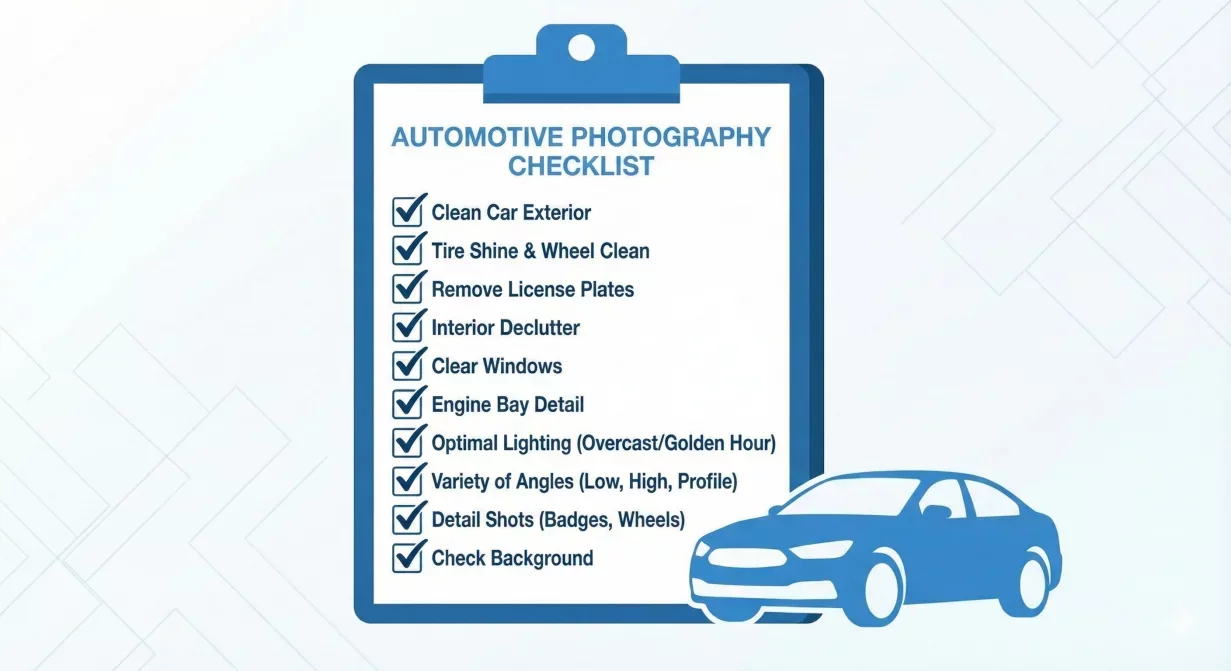
Standardizing car Car background quality across multiple dealership locations is the difference between a professional brand presence and visual chaos that confuses buyers. When each location produces photos that look different from every other, your dealer group sacrifices the brand recognition and trust that consistency builds.
This guide provides the systems, templates, and governance structures that successful multi-location operations use to maintain visual standards across every store, regardless of who captures or processes the photos.
Why Multi-Location Photo Consistency Matters
A buyer browsing your group's inventory online sees vehicles from multiple locations in a single search. If your Denver store produces clean, professional photos while your Phoenix store shows cluttered lot backgrounds, buyers notice. The inconsistency raises questions: is this really the same company? Does one location care less than the other?
Brand perception forms across all touchpoints. When visual presentation varies randomly across locations, whatever brand equity you have built through advertising, facilities, and customer service gets undermined by fragmented photo quality. The visual chaos communicates organizational disarray regardless of operational reality.
For dealer groups acquiring new stores, photo standardization is often overlooked during integration. New locations continue producing photos however they always did, creating visible inconsistency that buyers immediately notice when comparing inventory.
The Foundation: Centralized Standards Documentation
Consistency requires explicit standards that leave no room for interpretation. What seems obvious to one location manager may differ completely from another's assumptions. Documentation eliminates this variance.
Visual Standards Specification
Document exactly what acceptable photos look like:
- Background type and specific template identifiers
- Lighting enhancement levels and acceptable variance
- Color treatment parameters
- Shadow style and intensity
- Minimum resolution and aspect ratios
- Acceptable edge quality criteria with visual examples
Include reference images showing acceptable versus unacceptable results. Written criteria alone leave interpretation gaps; visual examples close them.
Capture Standards
Consistency starts before processing. Standardize capture across locations:
- Required shot sequence with numbered positions
- Minimum source photo quality (resolution, focus, exposure)
- Vehicle preparation requirements before photography
- Environmental conditions guidance (lighting, positioning)
Different capture practices produce different source photos that process differently even with identical templates. Standardize inputs to standardize outputs.
Process Documentation
Write step-by-step procedures for the complete workflow:
- File naming conventions including location identifiers
- Upload and organization procedures
- Template selection and application steps
- Quality verification checkpoints
- Export and platform-specific formatting
- Escalation procedures for quality issues
Procedures must be detailed enough that someone unfamiliar with your operation could follow them correctly.
Template Governance: Controlling What Gets Used
Templates enable consistency only when the right templates are used consistently. Template governance prevents drift.
Approved Template Library
Establish a defined set of approved templates for your dealer group. These templates represent your visual standard and are the only options available for production use.
Resist location requests for custom templates unless compelling brand reasons exist. Every additional template increases variation and complicates governance. A small, controlled template library produces better consistency than extensive options that encourage experimentation.
Template Change Control
Changes to approved templates should require formal approval from group-level management. Individual locations should not modify templates based on local preference. What seems like improvement at one location creates inconsistency across the group.
When template updates are genuinely needed, implement them across all locations simultaneously. Phased rollouts create temporary inconsistency; synchronized changes maintain uniformity.
Workflow Implementation Across Locations
Moving from documentation to execution requires deliberate implementation at each location.
Location Training
Every person who touches photo workflow needs training on group standards. This includes photographers capturing vehicles, editors processing photos, managers reviewing quality, and anyone who might fill in during absences.
Training should be standardized: same materials, same criteria, same examples across all locations. Train against documented standards, not against each trainer's personal interpretation.
Tool Standardization
All locations should use identical tools configured identically. Different software or different settings produce different results regardless of following the same written procedures.
If your group uses CarBG, ensure all locations have identical template configurations and processing settings. Tool consistency underlies process consistency.
Centralized vs. Distributed Processing
Decide whether processing happens at each location or centrally. Distributed processing provides faster turnaround but harder consistency. Centralized processing enables easier consistency but adds transfer time. Most dealer groups find distributed processing with strong governance produces the best balance of speed and consistency.
Quality Monitoring Across Locations
Standards without monitoring produce drift. Locations naturally adapt processes over time unless actively managed.
Regular Quality Audits
Conduct systematic quality reviews across all locations. Sample photos from each location weekly or monthly, score against documented standards criteria, track scores over time to identify trends, and compare locations to identify performance gaps.
Location Performance Dashboards
Make quality metrics visible to location managers. When managers see how their location compares to others, competitive dynamics often drive improvement without top-down pressure.
Common Multi-Location Pitfalls
Certain failure patterns appear repeatedly in dealer groups. Standards exist but are not enforced. New locations operate independently too long. Local managers customize without permission. Training happens once and is forgotten.
Awareness helps prevent these patterns. Documentation without accountability produces no change. Enforcement through audits and performance management makes standards real.
How CarBG Supports Multi-Location Standardization
CarBG provides the template system and batch processing infrastructure that multi-location standardization requires. Configured templates apply identical treatment regardless of which location processes photos.
Centralized template management ensures all locations work from the same approved options. Changes propagate to all locations automatically when templates are updated.
Final Thoughts
Standardizing car photo quality across multiple dealership locations requires documented standards, controlled templates, trained staff, consistent tools, and active monitoring. The investment in these systems pays returns through stronger brand presentation, improved buyer trust, and operational efficiency that scales across your entire dealer group. Try CarBG as the platform foundation for your multi-location photo standardization.
The CarBG Angle (FAQ Bits)
How do I get all locations to follow the same photo standards?
Documentation alone is insufficient. Combine written standards with visual examples, standardized training, consistent tools, regular audits, and performance accountability. Make compliance visible through metrics and dashboards.
Should each location have its own photo processing setup?
Distributed processing at each location provides faster turnaround. However, it requires stronger governance to maintain consistency. Most dealer groups find distributed processing with strong standards enforcement produces the best balance.
How often should I audit location photo quality?
Monthly audits provide sufficient frequency for most groups. Higher frequency may be needed during initial standardization rollout or when addressing identified problems.
What do I do when a location consistently underperforms?
First diagnose root cause: is it training, tools, staffing, or management attention? Targeted intervention addresses specific gaps. If problems persist after support, escalate to operational leadership.
How do I handle photo quality during acquisition integration?
Prioritize photo standardization early in integration, not as an afterthought. Train acquired location staff on standards immediately. Audit frequently during transition.

Tamas Magda
Co-founder, Growth and Partnerships at Car Background AI
Tamas Magda is co-founder of Car Background AI (carbackground.ai, CarBG), an AI car photo editor that replaces backgrounds on dealership inventory photos. He leads partnerships, growth, and business architecture, working with the development team on the product roadmap and with dealers on what their online listings actually need. He brings a background in venture building across APAC and MENA, and writes about vehicle merchandising, dealer photo workflows, and using AI on listing images without altering the car itself.
Tamas is a co-founder of Car Background AI and has a financial interest in the company. Articles that mention Car Background AI reflect that relationship.