The Smart Way to Prepare Car Photos for Line Groups Facebook Buy Sell and Instagram Reels
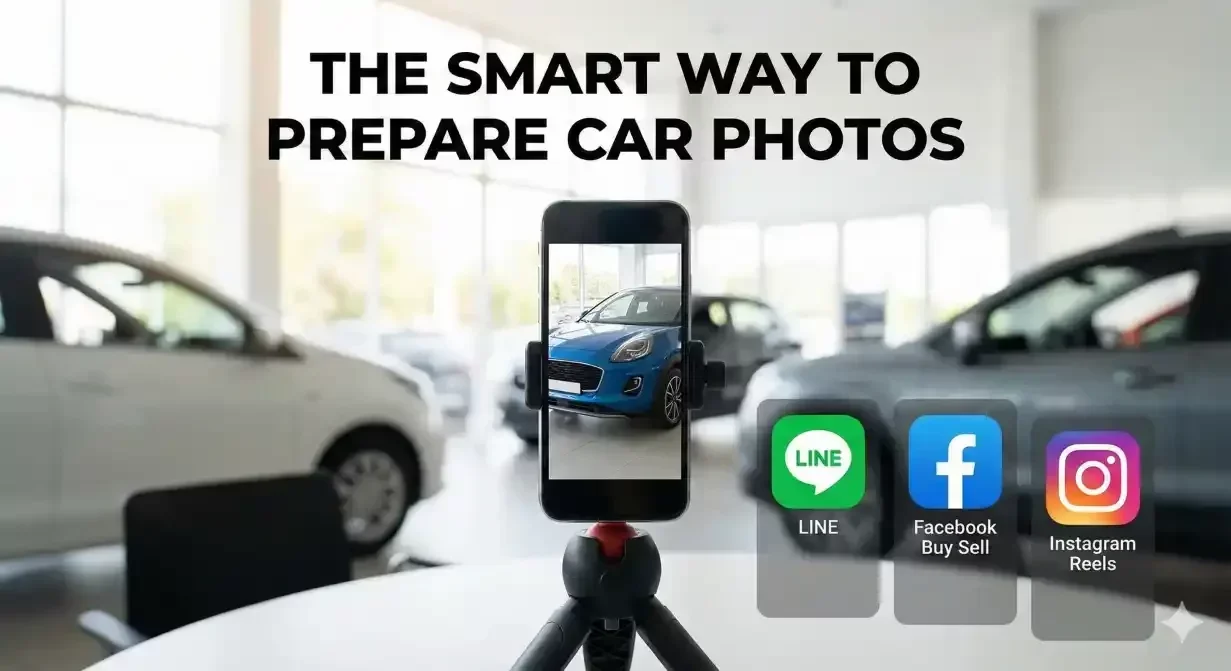
Check your recent vehicle sales. How many started with a message on Facebook? A comment in a local buy-and-sell group? A DM on Instagram after someone saw your Reel?
If you're selling used cars in most markets today, the answer is probably "more than half." The transaction might eventually move to official paperwork and formal processes, but the initial discovery and interest increasingly happens on social platforms, not traditional listing sites.
Facebook Marketplace, local buy-and-sell groups, Line groups (especially in Asian markets), Instagram feeds, Stories, and Reels—these are where buyers casually browse while commuting, waiting in line, or scrolling before bed. They're not in "serious car shopping mode" like they are on Cars.com or AutoTrader. They're just… looking.
And in that casual scrolling environment, your photos need to work completely differently than they do on traditional marketplaces.
Social platforms reward instant visual clarity. You have 1-2 seconds to make someone stop scrolling. Dense backgrounds, poor framing, dull lighting, or confusing composition mean they keep moving—your vehicle never even registers.
Preparing car photos specifically for social channels isn't about being fancy. It's about understanding how people actually consume content in fast-moving feeds and giving them visuals that cut through the noise.
Why Social Channels Demand Different Photography
Traditional automotive marketplaces like AutoTrader or Cars.com are destination sites. Buyers arrive with intent—they're actively shopping for vehicles. They'll tolerate less-than-perfect photos because they're motivated to dig deeper.
Social platforms operate on completely different psychology:
Passive browsing, not active searching: Most people aren't on Facebook specifically looking for cars. They're checking what friends posted, watching videos, reading news. Your vehicle listing appears between a wedding photo and a recipe video. It needs to grab attention from content that has nothing to do with car shopping.
Instant judgments on tiny screens: Your carefully photographed vehicle gets displayed as a thumbnail on a smartphone, maybe 2-3 inches wide. Any visual complexity, background clutter, or poor contrast makes the image unreadable at that size. Buyers literally can't tell what they're looking at, so they scroll past.
Feed algorithms prioritize engagement: Posts that get early engagement (likes, comments, shares) get shown to more people. Posts that get ignored quickly disappear. Your photo quality directly determines whether the algorithm helps or hurts your reach.
Platform compression degrades quality: Facebook, Instagram, and other platforms aggressively compress images to save bandwidth. Fine details disappear. Subtle lighting gets flattened. Photos that looked great on your computer look muddy and dull after platform processing. You need to compensate for this degradation.
Mobile-first consumption: Over 90% of social media browsing happens on smartphones. Desktop optimization doesn't matter. If your photos don't work on a 6-inch screen in bright sunlight or dim indoor lighting, they don't work, period.
What Makes Car Photos "Social-Ready"
Effective social car photography follows specific principles that differ from traditional automotive marketing:
1. Immediate visual clarity
The viewer needs to instantly recognize "this is a [sedan/SUV/truck] and it looks [good/interesting/appealing]" within one second. Anything that slows down that recognition—cluttered backgrounds, confusing angles, poor contrast—kills engagement.
Clean backgrounds aren't aesthetic preference—they're functional necessity. When the vehicle is the only element in the frame, it reads clearly even as a small thumbnail. When it's surrounded by other cars, fences, buildings, and visual noise, it becomes indistinguishable from the background.
2. Strong lead image
Your first photo determines whether anyone engages. It needs to show the vehicle's overall shape and appeal from the most flattering angle—usually front 3/4 view that captures both the front face and side profile.
This isn't the place for detail shots or interior photos. Lead with the image that makes someone think "That's nice, I want to see more" and tap through to your carousel or album.
3. Optimized brightness and contrast
Social platforms compress images and reduce quality. Photos that look properly exposed on your computer often appear too dark or too flat after platform processing, especially on mobile screens viewed in various lighting conditions.
Slightly boosting brightness and contrast compensates for compression and ensures the vehicle remains clearly visible across different viewing environments. This isn't about over-processing—it's about maintaining clarity through technical degradation.
4. Consistent visual style across the set
When someone engages with your post and swipes through multiple photos, visual consistency keeps them engaged. If each image has different backgrounds, different lighting quality, and different overall appearance, the set feels disjointed and unprofessional.
Consistent backgrounds, lighting, and treatment across all angles creates a cohesive presentation that builds confidence and keeps viewers engaged through the entire photo set.
5. Mobile-appropriate aspect ratios
Different platforms favor different aspect ratios. Instagram prefers square (1:1) or vertical (4:5). Facebook works well with horizontal (16:9) or square. Stories and Reels require vertical (9:16). Preparing photos in platform-appropriate formats ensures they display optimally rather than getting awkwardly cropped.
Common Social Photo Mistakes That Kill Engagement
Scroll through local buy-and-sell groups or Facebook Marketplace. You'll see these engagement-killing mistakes repeatedly:
Busy, distracting backgrounds: The vehicle is parked in a crowded lot with 10 other cars visible, chain-link fencing, service equipment, and random clutter. On a small mobile screen, viewers can barely identify which vehicle is actually for sale.
Poor framing and cropping: The car occupies maybe 30% of the frame, with vast empty space or irrelevant surroundings filling the rest. This wastes the already-limited screen real estate and makes the vehicle appear small and unimportant.
Inconsistent photo quality within sets: Photo 1 is reasonably well-lit outdoors. Photo 2 is dark and taken in a garage. Photo 3 is oversaturated. Photo 4 is blurry. This inconsistency signals amateur operation and undermines buyer confidence.
Text overlays that become unreadable: Adding price or features directly onto the image seems helpful, but often becomes illegible after platform compression or when viewed on small screens. Use platform caption features instead.
Too-dark images: Photos that look acceptable on a computer monitor appear significantly darker on mobile devices, especially after platform compression. Viewers can't see details, so they scroll past.
No clear hero shot: The photo set starts with an interior detail or an odd angle instead of an attractive overall view. Viewers don't engage because they don't immediately understand what they're looking at.
Each of these mistakes is easy to make and easy to fix—but most dealers keep making them because they're preparing photos for social platforms the same way they prepare for traditional marketplaces.
How AI Transforms Social Photo Preparation
AI-based car photo editors solve the specific challenges of social platform optimization systematically and at scale.
Automatic background removal: AI isolates the vehicle and removes all distracting elements—other cars, clutter, fences, buildings, everything. The vehicle then appears on a clean, simple background that reads clearly even as a tiny thumbnail.
This single enhancement dramatically improves scroll-stopping power. Clean backgrounds make vehicles instantly recognizable and visually appealing in crowded social feeds.
Intelligent lighting optimization: AI analyzes each image and adjusts exposure, contrast, and color balance to maintain clarity through platform compression. It can brighten underexposed areas, reduce harsh shadows, and enhance overall visibility—ensuring photos look good on actual mobile devices, not just your editing monitor.
Consistent processing across photo sets: Apply the same background and lighting treatment to all 8-12 photos from a vehicle shoot. This creates the visual cohesion that keeps viewers engaged as they swipe through your carousel or album.
Batch workflow for volume: Process multiple vehicles' worth of photos simultaneously rather than editing individual images. This makes social-optimized photography practical even for dealers moving significant inventory.
Platform-appropriate output: Export images sized and formatted for specific platforms—square for Instagram feed, vertical for Stories/Reels, horizontal for Facebook—ensuring optimal display without awkward cropping.
Building Your Social Photo Workflow
Effective social listing preparation becomes a repeatable system, not a one-off effort:
Step 1: Capture comprehensive angles (10 minutes)
Using a smartphone, photograph the vehicle from your standard angle set:
- Front 3/4 view (this will be your lead image)
- Rear 3/4 view
- Straight-on front
- Straight-on rear
- Both side profiles
- Interior dashboard/front seats
- Rear seats
- Cargo area
- Engine bay (if relevant for your market)
- Odometer reading
- Any notable features or condition details
Don't worry about background or lighting perfection—just capture clear, well-framed shots. AI will handle cleanup.
Step 2: AI processing (5 minutes)
Upload the photo set to your AI car photo editor. Select background removal and apply your standard clean background template. Choose lighting optimization to ensure clarity on mobile devices.
Process the entire set at once rather than editing individual images—this ensures consistency and saves time.
Step 3: Select and sequence (3 minutes)
Review processed images and select 6-10 best shots. Sequence them logically:
- Best front 3/4 view (hero shot)
- Rear 3/4 view
- Side profile
- Interior overview
- Dashboard/features
- Rear seats
- Cargo area
- Any special features or details
This sequence gives viewers a complete understanding as they swipe through.
Step 4: Platform-specific formatting (2 minutes)
Export versions optimized for your target platforms:
- Square (1:1) for Instagram feed and Facebook posts
- Vertical (9:16) if creating Stories or Reels content
- Horizontal (16:9) for maximum Facebook Marketplace visibility
Most AI photo editors can export multiple aspect ratios simultaneously from the same source images.
Step 5: Post strategically (5 minutes)
Create your social post with:
- Clear, concise description (year, make, model, key features)
- Transparent pricing
- Relevant hashtags for discoverability
- Contact method (DM, phone, WhatsApp/Line—whatever your market prefers)
- Your processed photo set in logical sequence
Total time from shooting to posted: ~25 minutes per vehicle.
Platform-Specific Optimization
Each social platform has unique characteristics worth considering:
Facebook Marketplace & Groups:
- Lead with horizontal or square images for maximum visibility
- First image determines whether listing appears in search results—make it count
- Include 8-12 photos showing comprehensive angles
- Clean backgrounds help your listing stand out in search grid view
- Price transparency in description improves engagement (reduces "What's your price?" messages)
Instagram Feed:
- Square format (1:1) maintains consistent grid appearance
- Strong first image is critical—this is what appears in followers' feeds
- Use carousel posts to show multiple angles (up to 10 images)
- Hashtags extend reach beyond followers (#usedcars #[yourlocation]cars #carsofinstagram)
- Consistent background style strengthens brand recognition across posts
Instagram Stories & Reels:
- Vertical format (9:16) required
- Keep text overlays minimal and large enough to read on mobile
- For Reels, show multiple angles in 15-30 second video format—AI-processed images work well as static slides
- Use platform stickers (price tag, location) for discoverability
- Include clear CTA (swipe up, DM for details)
Line Groups (Asian markets):
- Square or vertical formats work well
- Include comprehensive specs in text—Line users often prefer detailed information upfront
- Clean, professional images build trust in community groups
- Multiple angles in one post rather than sequential posting
How CarBG Optimizes for Social Success
CarBG was designed with social platform requirements in mind, making it particularly effective for dealers leveraging Facebook, Instagram, and Line for sales.
Key features for social optimization:
Clean background templates: Simple, professional backgrounds that read clearly even as small thumbnails in crowded feeds
Mobile-optimized lighting: Automatic brightness and contrast adjustments calibrated for how images actually appear on smartphones after platform compression
Batch processing: Handle entire vehicle photo sets at once, maintaining consistency across all angles
Multiple export formats: Generate platform-specific versions (square, horizontal, vertical) from the same source images
Fast workflow: Process and export social-ready images in minutes, not hours—critical when you're posting multiple vehicles across multiple platforms
The goal is making professional social presence achievable without requiring design skills or photography expertise from your team.
Measuring Social Photo Performance
Track these metrics to understand whether your photo optimization is working:
Engagement rate: Likes, comments, shares per post—higher engagement means better photos that resonate with viewers
Inquiry rate: Messages or comments per post—clean, clear photos should increase people reaching out for details
Click-through (for Marketplace): How many people click from search results into your full listing—strong lead images improve CTR
Follower growth (Instagram): Consistent, professional posts should gradually increase your follower base
Time to inquiry: How quickly do posts generate messages after publishing—quality photos accelerate response
Compare performance before and after implementing AI-enhanced social photo preparation. Most dealers see 30-50% improvement in engagement metrics within the first month.
The Compounding Advantage
Social platform success builds momentum:
Better photos generate more engagement. More engagement signals platform algorithms to show your content to more people. More visibility generates more inquiries and followers. More followers mean larger organic reach for future posts. The cycle continues building.
Meanwhile, competitors posting mediocre photos struggle to gain traction. Poor engagement signals algorithms to limit their reach. Their posts disappear quickly, seen by fewer people, generating fewer results.
The gap widens not because you're spending more money, but because you're creating content that social platforms reward.
Social as Primary Sales Channel
In many markets, especially for independent dealers and smaller operations, social channels have become the primary customer acquisition source—surpassing traditional classified sites and even dealer websites.
This shift makes sense: buyers are already on Facebook and Instagram daily. They're comfortable with the platforms. Communication happens through familiar tools (Messenger, DMs, Line). The barrier to engagement is lower than navigating traditional automotive marketplaces.
But success in this environment demands different approaches. What worked on AutoTrader doesn't necessarily work in Instagram feeds. The dealers winning on social platforms understand the medium and optimize accordingly.
Photo quality isn't everything, but it's the foundation. Without scroll-stopping visuals, your pricing, inventory quality, and customer service never get the chance to shine because no one stops to engage.
The Bottom Line
Social platforms have fundamentally changed how used car buyers discover inventory. The dealers succeeding in this environment aren't necessarily those with the biggest advertising budgets—they're the ones creating content optimized for how people actually consume social media.
That means:
- Photos that work on small mobile screens
- Clean backgrounds that enable instant recognition
- Optimized lighting that survives platform compression
- Consistent quality that builds brand recognition
- Fast, repeatable workflows that make this sustainable
AI car photo editors make this level of optimization practical without requiring design expertise or significant time investment. What used to demand professional photography services now takes minutes per vehicle using tools accessible to any dealer.
Your competitors are posting to Facebook groups and Instagram with whatever photos they happen to capture. Some look okay, most look mediocre, and they wonder why social selling isn't working for them.
You can show up differently—with consistently professional, scroll-stopping imagery that makes people pause, engage, and reach out.
That's not a minor advantage in crowded social feeds. It's the difference between getting lost in the noise and building a reputation as the dealer with inventory worth paying attention to.
The platforms, the tools, and the buyers are all ready. The only question is whether you'll optimize for how people actually shop today or keep preparing photos for how they shopped five years ago.
Frequently asked questions
Why do social channels need different car photos?
Platforms like Facebook groups, buy-and-sell listings, and Instagram Reels display images differently and compete for quick attention in a busy feed. Photos that work on a listing site may need cleaner framing or consistency to stand out socially. Preparing images with the channel in mind helps engagement.
What makes a car photo social-ready?
Social-ready photos are clean, clear, and consistent so they read well at a glance on a phone. Removing background clutter and keeping a uniform look across posts helps the vehicle stand out. CarBG can apply this consistent treatment across images.
How does AI help prepare car photos for social media?
AI tools quickly clean up backgrounds and standardize images so a dealer can prepare many social posts without manual editing. This keeps a consistent look across groups and Reels. The main benefit is producing social-ready visuals faster.

Tamas Magda
Co-founder, Growth and Partnerships at Car Background AI
Tamas Magda is co-founder of Car Background AI (carbackground.ai, CarBG), an AI car photo editor that replaces backgrounds on dealership inventory photos. He leads partnerships, growth, and business architecture, working with the development team on the product roadmap and with dealers on what their online listings actually need. He brings a background in venture building across APAC and MENA, and writes about vehicle merchandising, dealer photo workflows, and using AI on listing images without altering the car itself.
Tamas is a co-founder of Car Background AI and has a financial interest in the company. Articles that mention Car Background AI reflect that relationship.