
Night Car Photography Tips for After-Hours Dealer Lot Shots
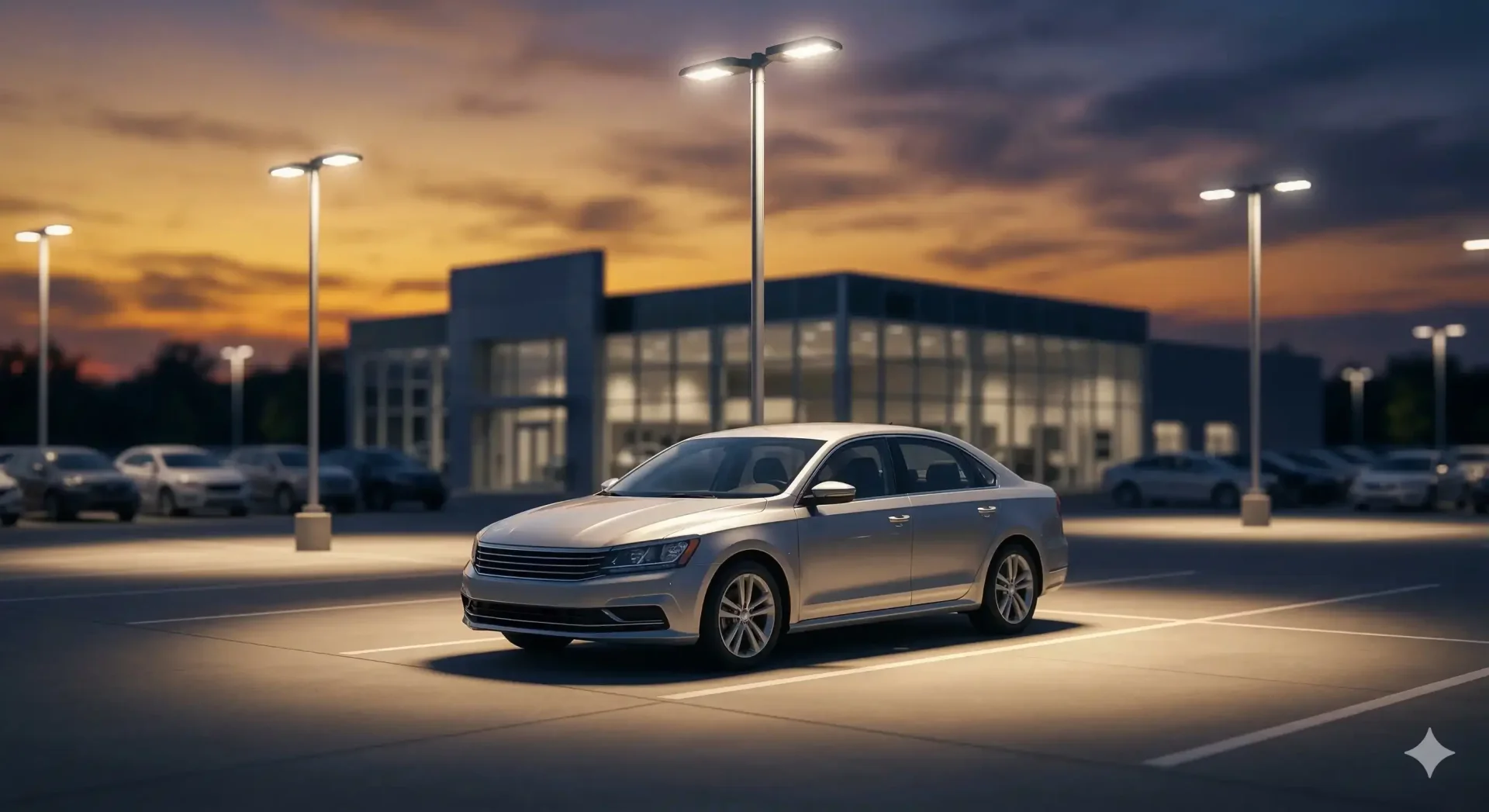
Night car photography on a dealer lot is not ideal, but it is often unavoidable. Trade-ins arrive late in the afternoon. Vehicles come off transport after business hours. Seasonal daylight shifts mean your shooting window shrinks to almost nothing in winter months. When you need to photograph inventory after dark, knowing the right car photography techniques for low light means the difference between usable images and a wasted effort that requires a reshoot the next morning.
This guide covers practical settings and methods for night time car photography on dealer lots, how to use existing lot lighting to your advantage, and when to let AI post-processing fix what the darkness breaks.
Why dealers need night car photography skills
The pressure to list vehicles quickly does not pause when the sun sets. Every day a car sits unlisted is a day it is not generating inquiries. For high-volume operations, waiting until the next morning to shoot late arrivals means falling behind on time-to-listing targets.
Winter compounds the problem. In northern markets, usable daylight for car photography at night-free shooting may last only from 8 AM to 4 PM in December and January. If your team is busy with customers during those hours, the shooting window disappears entirely.
The goal is not magazine-quality night photography. It is producing images clean enough for AI post-processing to normalize into listing-ready results. Shoot for usable raw material, and let the software handle the rest.
Phone settings for night time car photography
Smartphones have improved dramatically in low-light performance, but they still need help. These settings maximize your chances of getting usable images after dark.
Setting | Recommendation | Why |
|---|---|---|
Night mode | On (if available) | Captures multiple frames and merges them for better exposure and reduced noise |
HDR | On | Balances dark shadows and bright lot lights in the same frame |
Flash | Off | Phone flash creates harsh hot spots on the nearest panel and leaves the rest dark |
Resolution | Maximum | Higher resolution preserves more detail for AI enhancement |
Stabilization | Brace against a surface or use a tripod | Night mode uses longer exposures. Any movement creates blur. |
Timer | 2-second delay | Prevents shake from tapping the shutter button |
The most important car photography technique for night shooting on a phone is stability. Night mode and HDR both use longer exposure times, which means any hand movement creates blur. Lean your phone against a post, use a $15 phone tripod, or even rest it on the roof of another vehicle. The steadier the phone, the sharper the image.
Using lot lighting for car photography at night
Most dealer lots have overhead lighting, but it is designed for security and visibility, not photography. The light is uneven, casts harsh downward shadows, and shifts color depending on the bulb type (sodium yellow, LED white, fluorescent green). Working with this lighting requires positioning strategy.
Park the vehicle directly under the brightest light pole on your lot. This gives you the most even illumination with the fewest shadows. If you park between two poles, the car gets lit from both sides but the center panel falls into shadow, creating an unflattering striped effect.
Walk around the vehicle before shooting and identify the side with the best light distribution. Shoot that side first while light conditions are consistent, then reposition the car if needed for the opposite side.
If your lot has mixed lighting (some sodium, some LED), use the LED section. LED lot lights produce a more neutral color temperature that AI post-processing can correct more accurately than the deep orange of sodium lamps. Under sodium lights, every vehicle looks the same muddy amber regardless of actual paint color.
Portable lighting options for night car photography
If you regularly shoot after dark, a small investment in portable lighting pays for itself in reduced reshoots.
LED panel lights ($30-100 each) are the most practical option. Two panels, one on each side of the vehicle, fill the shadows that overhead lot lights create. Battery-powered models give you 1-3 hours of runtime, more than enough to shoot several vehicles.
Position the panels at roughly 45-degree angles to the vehicle, about 6-8 feet away and at door handle height. This angle mimics natural side lighting and minimizes harsh shadows under the car. Avoid pointing lights straight at the vehicle from the front, which flattens the image and creates blinding reflections on the windshield.
A reflector (even a piece of white foam board) can bounce existing lot light into shadow areas. Hold it or prop it on the opposite side from the strongest light source. This low-cost car photography technique fills dark areas without introducing a second light color.
Long exposure car photography for creative dealer content
While standard inventory shots require sharp, well-lit images, long exposure car photography opens up creative possibilities for marketing content and social media.
A long exposure (1-4 seconds) with the car stationary on the lot at night captures light trails from passing traffic, creates a smooth, professional glow from lot lighting, and blurs any moving elements (trees, clouds) into a dynamic backdrop. These images are not for marketplace listings, but they make compelling Instagram and Facebook content that showcases your inventory with visual flair.
To shoot long exposures on a phone, use a dedicated app that allows manual shutter speed control (ProCamera, Halide, or the built-in Pro mode on Samsung). Mount the phone on a tripod, set the shutter to 1-4 seconds, and tap the timer to avoid shake. On a camera, switch to shutter priority mode (S or Tv) and dial in the desired exposure time.
Driving car photography, where the vehicle is moving through the frame with light trails, requires a longer exposure (4-15 seconds) and careful positioning. These shots are purely for creative content and social media engagement, not practical for inventory listing use.
When to skip night shooting and rely on AI post-processing
Sometimes the honest answer is: shoot tomorrow morning. If the lot lighting is extremely uneven, if the vehicle is parked in a dark corner you cannot reposition from, or if rain or fog makes visibility poor, the raw images will be too compromised for even AI to salvage cleanly.
However, if you can get a reasonably well-lit, sharp image with accurate color (even if the background is dark and messy), AI lighting and background correction can handle the rest. Background replacement eliminates the dark lot entirely. Lighting normalization corrects uneven exposure. Color correction removes the orange or green tint from lot lights.
The threshold to aim for is this: if the vehicle itself is clearly visible, reasonably sharp, and not color-shifted beyond recognition, AI can turn it into a clean listing image. If the vehicle is underexposed to the point where body panels are indistinguishable, reshoot in daylight.
Night car photography workflow for dealer teams
Here is a practical SOP for after-hours inventory shooting that any staff member can follow.
- Position the vehicle under the brightest, most neutral-colored light pole on the lot.
- Clean the vehicle (or at minimum wipe the glass and visible panels). Water and dust scatter light unpredictably at night.
- Set your phone to night mode + HDR, maximum resolution, flash off, and 2-second timer.
- Brace the phone against a stable surface or use a tripod. Shoot the full 11-angle sequence.
- Review the first three images immediately. Check sharpness by zooming to 100%. If blurry, slow down and stabilize better.
- Upload the set to your AI processing tool. Select your standard background template.
- Let AI handle background replacement, lighting normalization, and color correction.
- QA check: verify the processed images show accurate paint color and clean edges.
This workflow adds roughly 5 minutes compared to daytime shooting, mostly from the extra care needed for stability and light positioning. The result is a vehicle listed the same evening rather than waiting until the next day, keeping your time-to-listing on track.
Final thoughts
Night car photography on a dealer lot will never match the quality of a controlled daytime shoot, and it does not need to. The goal is capturing clean enough raw images for AI post-processing to normalize into professional listing photos. Position vehicles under the best available light, stabilize your phone, and shoot with night mode enabled. Then let AI handle backgrounds, lighting, and color. Try CarBG free on your next after-hours batch to see how much usable inventory you can list without waiting for sunrise.
Frequently asked questions
What are the best settings for night car photography on a phone?
Enable night mode and HDR, turn flash off, set resolution to maximum, and use a 2-second timer to prevent shake. The most critical factor is stability: use a tripod, lean against a surface, or brace the phone on something solid. Night mode uses longer exposures, so any hand movement creates noticeable blur.
Can I use lot lighting for car photography at night?
Yes, but position the vehicle directly under the brightest, most neutral-colored light pole (LED preferred over sodium). Avoid parking between two poles, which creates uneven lighting with a shadow stripe across the center. Walk around the vehicle before shooting to identify the side with the best light distribution and start there.
Is night time car photography good enough for marketplace listings?
With proper technique and AI post-processing, yes. If the vehicle is clearly visible, reasonably sharp, and not severely color-shifted, AI tools can replace the dark background, normalize lighting, and correct color tint. The result is a listing image that looks like it was shot in a studio. If the vehicle is too dark to distinguish body panels, reshoot in daylight.
What portable lights work for night car photography?
Battery-powered LED panel lights ($30-100 each) are the most practical option. Position two panels at 45-degree angles to the vehicle, about 6-8 feet away at door handle height. This fills the shadows that overhead lot lights create without introducing harsh reflections. Even a white foam board used as a reflector can bounce existing light into dark areas.
How does long exposure car photography work?
Long exposure uses a slow shutter speed (1-15 seconds) to capture more light and create motion effects like light trails from passing traffic. It requires a tripod and a camera app with manual controls. These images are great for social media and marketing but are not practical for standard inventory listings, which need sharp, static images.
Should I reshoot in daylight or rely on AI to fix night photos?
If the vehicle is clearly visible and the images are sharp, AI post-processing can correct lighting and color issues effectively. If the vehicle is so underexposed that body panels are indistinguishable, or if the images are blurry from camera shake, reshoot in daylight. The threshold is visibility: if you can clearly see the vehicle in the raw photo, AI can work with it.
75 E 3rd street, Sheridan, WY, 82801, USA
