Inside the Engine: How We Build AI That Actually Understands Cars
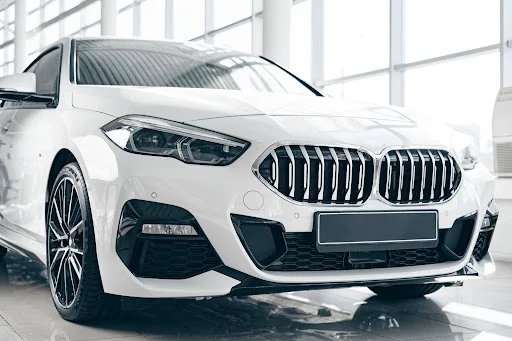
We build AI that understands cars by building for nothing else. Every decision starts with one question: what does a car photo need to look real on a listing? That focus shapes how we handle the details generic tools miss, like see-through windows, real ground shadows, and clean antenna edges.
This post is a plain look behind the product. Where the idea came from, how we approach the problem, what took us longest to get right, and what we still have not solved.
Where the idea came from
It started with a problem dealers kept describing. When we ask dealers why they want help with photos, the most common answer is the same: the backgrounds are messy. A car comes in, it gets parked wherever there is space, and that space is usually a corner with stacked tires, a stained floor, or another car in frame.
Getting a clean shot meant physically moving the car to a better spot, then doing it again for the next one. Dealers also wanted every car to look the same on their listings, and a busy lot rarely allows that.
Background replacement for cars was not a new idea. The category has existed for around five years, and most tools in it date from that first wave. What we saw was a quality ceiling. Many of those tools were built on older techniques, and the results often looked edited.
That gap, between "background changed" and "photo looks real," is the one we set out to close.
Who builds it, and how we work
We are a small, focused team, and the product and AI work sit with one person whose whole job is the image problems that make car edits look fake. Our rule is to go deeper rather than wider. We would rather make one result noticeably better than ship a long list of extra features.
That is also why the product looks simple. A dealer uploads a photo, picks a background, and gets a result. The complexity sits underneath, where it belongs.
Why we only build for cars
Most photo tools are built for everything: product shots, portraits, pets, furniture. Cars get the same treatment as a coffee mug, and it shows.
A car is one of the hardest objects to edit convincingly. It has glass you can see through, paint that reflects its surroundings, thin parts like antennas and mirrors, and wheels that need to sit on the ground. A tool built for coffee mugs has no reason to handle any of that well. Building only for cars lets us treat each of those as a problem worth solving properly.
Cutting a car out is not the same as understanding one
Many tools in this space rely on segmentation. The software traces the outline of the car, cuts it out, and pastes it onto a new background. It is fast, and for a quick cutout it works.
The trouble shows up on a listing. A pasted car often floats, because nothing ties it to the floor. The old background stays visible through the windows. The new scene was "shot" from a different angle than the car. Buyers may not know the word for it, but they know when a photo looks pasted.
Our process is fully AI-driven. Instead of only cutting the car out, it rebuilds the scene around the real vehicle so the two match. The car stays the car. What changes is everything around it, and how well that new scene fits the original photo.
The details that give an edit away
When we test results, we look where buyers look. These four details separate a believable photo from an obvious edit, and they are where most of our work goes.
Perspective
Every car photo is taken from a specific height and angle. If the new background was "shot" from somewhere else, the car looks wrong in it, even when nothing else is broken. We align the background's perspective to the car's, so the floor lines, horizon, and walls sit where the camera would actually see them.
Ground shadows
A car with no shadow looks like a sticker. We generate a shadow under the car that matches the new scene, so the tires sit on the floor instead of hovering over it. It is the fastest way to tell a real-looking edit from a cheap one.
Windows
Glass is where most edits fail. Look through the windows of a badly edited car and you will still see the old parking lot. We handle window transparency so the new background shows through the glass the way it would in real life.
Antennas, mirrors, and small parts
Thin parts are easy to clip off or leave with a ghost of the old background around them. We pay close attention to antennas, mirror edges, and other fine details, because they are exactly what a careful buyer zooms in on.
Interiors and close-ups are a different job
Exterior shots get a full background change. Interiors need something else. Through the side windows of an interior shot, you can see the lot outside, so we clean and remove that background to keep the cabin photo as tidy as the exterior set.
Close-ups of parts with a background behind them, like a wheel or a badge, need the same care. Every result also gets automatic upscaling, so the finished image holds up on large listing displays.
The learning curve
None of this arrived at once. Quality has improved in steps, and it still does. We got standard exterior images to a level we are confident in first. Now the work moves to harder cases, one at a time.
The biggest lesson was that a clean outline is not the same as a believable photo. A car can be cut out perfectly and still look fake if the shadow, the angle, or the glass is wrong. Most of our effort since has gone into those parts rather than the cutout itself.
The second lesson was about trade-offs. Rebuilding a scene carefully takes a little longer than a simple cutout. We decided early that a few extra seconds matter less to a dealer than a photo that looks edited, and we have not changed that view.
The third was accepting that AI image work is not perfect every time. So we built the product around it. Every finished image has a "Generate again" button in the full-screen before-and-after view. The first generation of a photo and background pair costs one credit, and redos of that pair are free, up to five attempts in total.
The first to let dealers generate their own backgrounds
Car photo tools have always meant choosing from what the tool gives you: a preset library, a virtual studio, an option to upload your own backdrop, or plain background removal. We offer a ready-made library too, and for most listings it is all a dealer needs.
We wanted to go further. With custom car backgrounds, a dealer generates a new background from a written prompt or from an image they upload, then uses that scene across their inventory.
As of October 2026, we are the first car photo tool to offer this as a live feature. When we reviewed the direct car-photo competitors, every one worked from presets, virtual studios, uploads, or removal.
It matters for a practical reason. A matching backdrop across the grid tells buyers they are dealing with an established operation, and generation lets a store make that backdrop its own. For help choosing a look, our guide to the white or outdoor car background covers which tends to work where.
Why generic AI tools are not the answer
A fair question is why dealers don't just use a general AI chat tool. They can produce an image, but they are not built for real inventory photos. They don't know to keep the car untouched, match the angle, or show the new scene through the glass. Some also add watermarks, which rules them out of a listing entirely.
That gap is the reason we build for cars only. A listing photo has to look real under a buyer's zoom, and that takes a tool made for the job.
What we have not solved yet
There is still work ahead, and we would rather say so. Reflective paint and glossy surfaces are among the hardest problems in car imaging, and they are an active area of work for us. So is detail quality on very close shots. We will share progress as it ships rather than promise dates.
The proof is in the edges
Understanding cars comes down to details most tools skip: perspective, shadows, glass, and the thin parts at the edge of the frame. That is where our effort goes, and it is the part you can check for yourself. Take the three worst-photographed cars on your lot, run them through Car Background AI, and zoom in on the windows and mirror edges. If they do not hold up, close the tab.
FAQ
Does Car Background AI change the car itself?
No. The car stays the car. We rebuild the background and the scene around it, including shadows and what shows through the windows, but the vehicle's shape, color, and condition stay as photographed.
How is this different from a regular background remover?
A regular remover cuts the car out and pastes it onto a new scene. We match the new background's perspective to the car and add ground shadows and window transparency, so the result looks photographed, not pasted.
Was Car Background AI first with prompt-based backgrounds?
Yes. As of October 2026, we are the first car photo tool to offer background generation from a prompt or an uploaded image as a live feature. Competitors offer presets, virtual studios, uploads, or removal.
Why does processing take a little longer than some tools?
Because rebuilding a scene precisely takes more work than a simple cutout. We chose quality over shaving off seconds, since a fake-looking photo costs a dealer more than a short wait.
What happens if a result is not good enough?
Use the "Generate again" button. Redos of the same photo and background pair are free, up to five attempts in total, so a weak result costs nothing extra to fix.
This post is a plain look behind the product. Where the idea came from, how we approach the problem, what took us longest to get right, and what we still have not solved.
Where the idea came from
It started with a problem dealers kept describing. When we ask dealers why they want help with photos, the most common answer is the same: the backgrounds are messy. A car comes in, it gets parked wherever there is space, and that space is usually a corner with stacked tires, a stained floor, or another car in frame.
Getting a clean shot meant physically moving the car to a better spot, then doing it again for the next one. Dealers also wanted every car to look the same on their listings, and a busy lot rarely allows that.
Background replacement for cars was not a new idea. The category has existed for around five years, and most tools in it date from that first wave. What we saw was a quality ceiling. Many of those tools were built on older techniques, and the results often looked edited.
That gap, between "background changed" and "photo looks real," is the one we set out to close.
Who builds it, and how we work
We are a small, focused team, and the product and AI work sit with one person whose whole job is the image problems that make car edits look fake. Our rule is to go deeper rather than wider. We would rather make one result noticeably better than ship a long list of extra features.
That is also why the product looks simple. A dealer uploads a photo, picks a background, and gets a result. The complexity sits underneath, where it belongs.
Why we only build for cars
Most photo tools are built for everything: product shots, portraits, pets, furniture. Cars get the same treatment as a coffee mug, and it shows.
A car is one of the hardest objects to edit convincingly. It has glass you can see through, paint that reflects its surroundings, thin parts like antennas and mirrors, and wheels that need to sit on the ground. A tool built for coffee mugs has no reason to handle any of that well. Building only for cars lets us treat each of those as a problem worth solving properly.
Cutting a car out is not the same as understanding one
Many tools in this space rely on segmentation. The software traces the outline of the car, cuts it out, and pastes it onto a new background. It is fast, and for a quick cutout it works.
The trouble shows up on a listing. A pasted car often floats, because nothing ties it to the floor. The old background stays visible through the windows. The new scene was "shot" from a different angle than the car. Buyers may not know the word for it, but they know when a photo looks pasted.
Our process is fully AI-driven. Instead of only cutting the car out, it rebuilds the scene around the real vehicle so the two match. The car stays the car. What changes is everything around it, and how well that new scene fits the original photo.
The details that give an edit away
When we test results, we look where buyers look. These four details separate a believable photo from an obvious edit, and they are where most of our work goes.
Perspective
Every car photo is taken from a specific height and angle. If the new background was "shot" from somewhere else, the car looks wrong in it, even when nothing else is broken. We align the background's perspective to the car's, so the floor lines, horizon, and walls sit where the camera would actually see them.
Ground shadows
A car with no shadow looks like a sticker. We generate a shadow under the car that matches the new scene, so the tires sit on the floor instead of hovering over it. It is the fastest way to tell a real-looking edit from a cheap one.
Windows
Glass is where most edits fail. Look through the windows of a badly edited car and you will still see the old parking lot. We handle window transparency so the new background shows through the glass the way it would in real life.
Antennas, mirrors, and small parts
Thin parts are easy to clip off or leave with a ghost of the old background around them. We pay close attention to antennas, mirror edges, and other fine details, because they are exactly what a careful buyer zooms in on.
Interiors and close-ups are a different job
Exterior shots get a full background change. Interiors need something else. Through the side windows of an interior shot, you can see the lot outside, so we clean and remove that background to keep the cabin photo as tidy as the exterior set.
Close-ups of parts with a background behind them, like a wheel or a badge, need the same care. Every result also gets automatic upscaling, so the finished image holds up on large listing displays.
The learning curve
None of this arrived at once. Quality has improved in steps, and it still does. We got standard exterior images to a level we are confident in first. Now the work moves to harder cases, one at a time.
The biggest lesson was that a clean outline is not the same as a believable photo. A car can be cut out perfectly and still look fake if the shadow, the angle, or the glass is wrong. Most of our effort since has gone into those parts rather than the cutout itself.
The second lesson was about trade-offs. Rebuilding a scene carefully takes a little longer than a simple cutout. We decided early that a few extra seconds matter less to a dealer than a photo that looks edited, and we have not changed that view.
The third was accepting that AI image work is not perfect every time. So we built the product around it. Every finished image has a "Generate again" button in the full-screen before-and-after view. The first generation of a photo and background pair costs one credit, and redos of that pair are free, up to five attempts in total.
The first to let dealers generate their own backgrounds
Car photo tools have always meant choosing from what the tool gives you: a preset library, a virtual studio, an option to upload your own backdrop, or plain background removal. We offer a ready-made library too, and for most listings it is all a dealer needs.
We wanted to go further. With custom car backgrounds, a dealer generates a new background from a written prompt or from an image they upload, then uses that scene across their inventory.
As of October 2026, we are the first car photo tool to offer this as a live feature. When we reviewed the direct car-photo competitors, every one worked from presets, virtual studios, uploads, or removal.
It matters for a practical reason. A matching backdrop across the grid tells buyers they are dealing with an established operation, and generation lets a store make that backdrop its own. For help choosing a look, our guide to the white or outdoor car background covers which tends to work where.
Why generic AI tools are not the answer
A fair question is why dealers don't just use a general AI chat tool. They can produce an image, but they are not built for real inventory photos. They don't know to keep the car untouched, match the angle, or show the new scene through the glass. Some also add watermarks, which rules them out of a listing entirely.
That gap is the reason we build for cars only. A listing photo has to look real under a buyer's zoom, and that takes a tool made for the job.
What we have not solved yet
There is still work ahead, and we would rather say so. Reflective paint and glossy surfaces are among the hardest problems in car imaging, and they are an active area of work for us. So is detail quality on very close shots. We will share progress as it ships rather than promise dates.
The proof is in the edges
Understanding cars comes down to details most tools skip: perspective, shadows, glass, and the thin parts at the edge of the frame. That is where our effort goes, and it is the part you can check for yourself. Take the three worst-photographed cars on your lot, run them through Car Background AI, and zoom in on the windows and mirror edges. If they do not hold up, close the tab.
FAQ
Does Car Background AI change the car itself?
No. The car stays the car. We rebuild the background and the scene around it, including shadows and what shows through the windows, but the vehicle's shape, color, and condition stay as photographed.
How is this different from a regular background remover?
A regular remover cuts the car out and pastes it onto a new scene. We match the new background's perspective to the car and add ground shadows and window transparency, so the result looks photographed, not pasted.
Was Car Background AI first with prompt-based backgrounds?
Yes. As of October 2026, we are the first car photo tool to offer background generation from a prompt or an uploaded image as a live feature. Competitors offer presets, virtual studios, uploads, or removal.
Why does processing take a little longer than some tools?
Because rebuilding a scene precisely takes more work than a simple cutout. We chose quality over shaving off seconds, since a fake-looking photo costs a dealer more than a short wait.
What happens if a result is not good enough?
Use the "Generate again" button. Redos of the same photo and background pair are free, up to five attempts in total, so a weak result costs nothing extra to fix.

Tamas Magda
Co-founder, Growth and Partnerships at Car Background AI
Tamas Magda is co-founder of Car Background AI (carbackground.ai, CarBG), an AI car photo editor that replaces backgrounds on dealership inventory photos. He leads partnerships, growth, and business architecture, working with the development team on the product roadmap and with dealers on what their online listings actually need. He brings a background in venture building across APAC and MENA, and writes about vehicle merchandising, dealer photo workflows, and using AI on listing images without altering the car itself.
Tamas is a co-founder of Car Background AI and has a financial interest in the company. Articles that mention Car Background AI reflect that relationship.